

Publishing
Click the audio play button to hear the entire article!!!
It’s great that you want to start self-publishing. Becoming a successful author is a very exciting and thrilling journey during which you will gain a wealth of knowledge and, one can only hope, financial rewards.
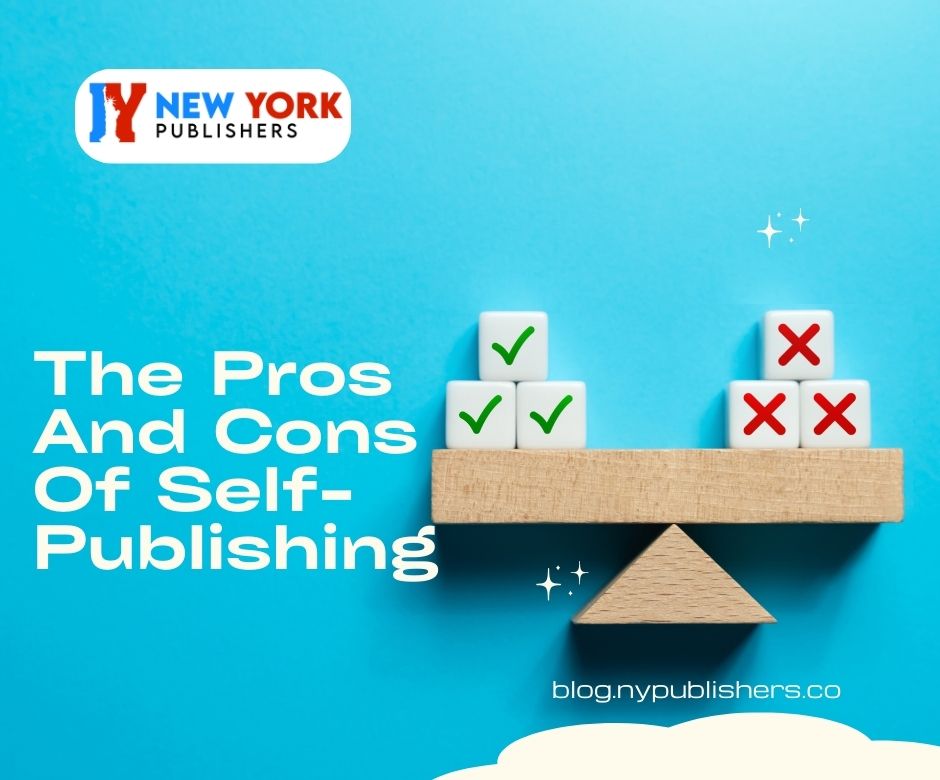
But before you make a final decision, you should weigh the benefits and drawbacks of the publishing method to understand what you’re getting into and whether it’s the right choice for your writing career.
Weighing the Advantages and Drawbacks of Self-Publishing:
Some writers self-publish their works to avoid working with a typical book publisher, exploring options like 14 Steps to Self-Publishing a Book. It offers advantages over more conventional forms of publishing and some disadvantages as well.
Advantages:
1- Speed:
One of the most significant advantages of self-publishing is the ability to publish your work quickly. When working with a traditional publishing house, the process can be lengthy and time-consuming.
It often involves finding an agent, going through multiple rounds of submissions, negotiating contracts, and waiting for the publisher’s release schedule. This process can take several months and, in some cases, even years.
In contrast, it gives authors more control over their book’s publication timeline.
You can move swiftly through the publishing process once you have finished writing and editing your manuscript, as detailed in The Essential Self-Publishing Checklist: Your Path to Publication. You can set your release date without a publisher’s schedule constraints.
This speed can be advantageous if you have a specific timeline, such as wanting to capitalize on a particular trend or event or getting your work into the world as soon as possible.
2- High Royalty Rate:
Traditional publishing contracts often involve authors receiving a lower percentage of the book’s royalties, typically ranging from 6% to 25%. In contrast, In self-publishing, you can earn a larger share of the profits, as explained in How to Make Millions Writing a Book, sometimes up to 70%, depending on the platform and pricing structure.
This higher royalty rate can financially reward authors, especially if their book achieves significant sales.
3-Control Over the Creative Process:
A book encompasses several forms: eBook, paper, audiobook, translation, screenplay, merchandise, comics, video games, and more.
However, conventional publishers are ignorant of new ideas and stuck in the past, so they fail to explore all potential income streams. I don’t know about you, but I’d be quite annoyed if I saw a conventional publisher pass up a chance to make some money.
The creative authority over the book publishing process is entirely up to you as a self-publisher, including venturing into Self-Publishing a Comic Book. You are free to pursue any avenue that will help you advance your job and increase your profits. Regarding potential revenue streams from your book, the sky’s the limit.
4- Continuous Availability:
The continuous availability of books is a significant advantage that authors gain in self-publishing. Unlike traditional publishing, where books can be removed from circulation due to various factors, such as low sales or being out of print, self-published books can remain in the market indefinitely.
One of the reasons traditional publishers may remove books from circulation is efficiency in managing their catalog. Publishers may decide to discontinue printing and distribution if a book does not meet sales expectations or becomes financially unviable.
This can be disheartening for authors who have poured their time and effort into writing and promoting their books, only to see them disappear from the shelves.
Drawbacks:
1-Costs:
Self-publishing can incur various expenses if you want to ensure a professional-quality final product. Hiring professional editors, cover designers, and marketing teams can add up quickly. These costs may range from a few hundred to several thousand dollars, depending on the level of services you require.
Additionally, you may need to invest in ISBN registration, formatting software, and printing if you decide to produce physical copies of your book. It’s important to carefully budget and consider these costs before committing.
2-Quality:
Self-published books have garnered a reputation for sometimes lacking the same editorial rigor as traditionally published works. Without the guidance and expertise of professional editors, authors may overlook errors, typos, or other issues that can diminish the book’s overall quality.
With lower-quality work, authors risk damaging their reputation and credibility as writers. To maintain high-quality standards, self-published authors must prioritize professional editing, proofreading, and formatting.
3-Marketing:
One of the significant challenges with self-publishing is the limited marketing support compared to traditional publishing. Traditional publishers such as new york publishing typically have established relationships with bookstores, libraries, and other distribution channels, which can help increase the book’s visibility to a wider audience.
In contrast, self-published authors must be responsible for marketing their own work. This can involve creating an author platform, building an online presence, leveraging social media, arranging book signings, and investing in advertising.
Self-published authors must dedicate significant time and effort to market their books effectively.
4- Distribution:
Traditional publishing houses have established distribution networks that enable physical and digital copies of books to reach bookstores, libraries, and online retailers worldwide.
In contrast, self-published authors often face challenges in securing widespread distribution, as explored in Capturing Moments: Self-Publishing a Photography Book.
While online platforms like Amazon and Barnes & Noble provide opportunities for self-published authors to reach readers, getting physical copies of the book into physical stores and libraries can be difficult without the network and connections of a traditional publisher.
Limited distribution can restrict the potential reach and sales of self-published books.
Essential Elements and Detailed Insights
| Category | Advantages | Drawbacks |
|---|---|---|
| Speed | Quick publication process, more control over the timeline | Costs for editing, design, marketing |
| Royalty Rate | Higher percentage of profits (up to 70%) | Need for investment in ISBN, software, printing |
| Creative Control | Full authority over the book’s form and potential revenue streams | Quality concerns without professional editing |
| Availability | Books can remain in the market indefinitely | Challenges in marketing and building an online presence |
| Distribution | Easy access to online platforms like Amazon | Difficult to secure widespread physical distribution |
The Bottom Line:
Many factors, including the author’s objectives, available resources, and intended readers, determine whether conventional or self-publishing is preferable. The benefits include more control, better royalty rates, and a shorter time to market, but the drawbacks include more work and money needed for distribution and advertising.
Ultimately, your goals and interests as an author or artist will determine whether you should self-publish, further explained in Guided Success: The Role of a Self-Publishing Consultant. To market and distribute your book, you must work hard yet have complete creative control and the potential to earn more money.